
Modernising Legacy Systems: Challenges and Solutions
In today's fast-paced digital economy, technology evolves at breakneck speed. However, many businesses still rely on systems built decades ago. These
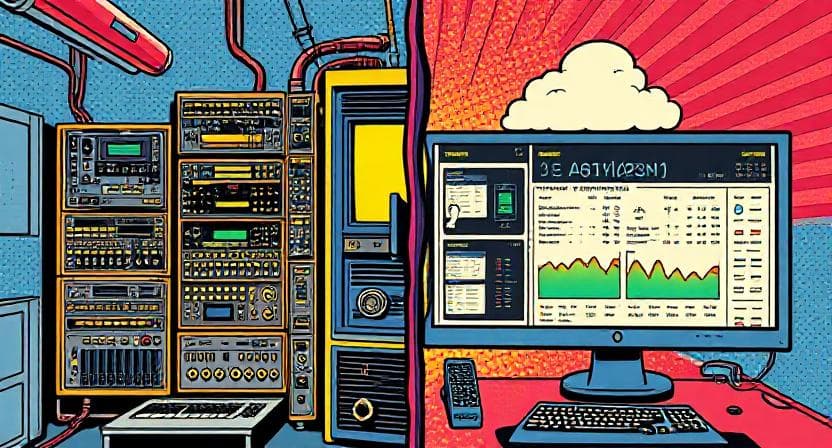
In today’s fast-paced digital economy, technology evolves at breakneck speed. However, many businesses still rely on systems built decades ago. These outdated platforms, often referred to as legacy systems, remain deeply embedded in day-to-day operations. Although they may have served their purpose in the past, the future demands flexibility, efficiency, and resilience. That’s why modernising legacy systems has become essential for organisations aiming to stay competitive.
Modernising legacy systems is not simply about upgrading software. It involves rethinking outdated infrastructure, adapting to new workflows, and embracing innovation. While the path forward presents challenges, the long-term benefits far outweigh the initial hurdles.
What Are Legacy Systems?
Legacy systems are outdated technologies that are still in use despite newer, more modern alternatives being available. They may include old programming languages, on-premise databases, or obsolete user interfaces. Often, these systems are no longer supported by vendors, lack compatibility with modern software, and are difficult to maintain. Even so, many companies continue using them because they are tied to core business functions.
These systems often hold massive amounts of critical data. Over time, organisations invest heavily in customisations, making them hard to replace. Nonetheless, modernising legacy systems becomes unavoidable as performance issues, security risks, and integration limitations emerge.
The Challenges of Modernising Legacy Systems
Although the idea of upgrading sounds simple, modernising legacy systems comes with significant challenges. To begin with, technical debt builds up over time. Systems patched repeatedly lose structure and clarity, making redevelopment a complex task.
Moreover, data migration presents another major obstacle. Shifting large volumes of data from outdated formats to modern environments can be risky and time-consuming. Even with careful planning, data integrity and system downtime remain concerns.
Another difficulty lies in integration. Legacy platforms were not built to interact with modern APIs or cloud solutions. As a result, compatibility issues often delay progress.
Security also becomes a growing concern. Older systems are more vulnerable to cyberattacks, especially when vendors no longer release patches. At the same time, resistance to change within the organisation can slow down digital transformation efforts. Staff training, new workflows, and altered job roles require clear communication and support.
Yet, despite these hurdles, modernising legacy systems is not only possible but also practical with the right approach.
Effective Strategies for Modernisation
There are several ways to approach the task. One option is rehosting, often referred to as “lift and shift”. This involves moving existing applications to the cloud without changing their core architecture. While this is a quicker method, it offers limited optimisation.
Alternatively, replatforming enables companies to make incremental improvements during the transition. This helps improve scalability without rebuilding the entire system. For more ambitious organisations, refactoring or re-architecting delivers greater benefits. This strategy involves rewriting parts of the system for better performance, security, and maintainability.
In some cases, the best path is a full rebuild. Starting from scratch using modern frameworks gives you complete control over functionality and user experience. Meanwhile, complete replacement of old systems with off-the-shelf or cloud-native solutions is also gaining popularity.
Whatever the method, modernising legacy systems must align with business goals. Choosing the right strategy depends on budget, timeline, system complexity, and long-term objectives.
Best Practices for Success
The first step involves conducting a thorough audit of existing infrastructure. This helps identify outdated components and potential risks. Following this, it’s important to prioritise systems that impact customer experience, compliance, or operational efficiency.
Next, stakeholder alignment is key. All departments must understand the purpose and benefits of modernisation. When leadership is fully onboard, momentum builds naturally.
Training plays a central role as well. Staff should feel confident using modern tools and systems. Early involvement and ongoing support ease the transition.
Furthermore, it’s advisable to collaborate with experienced digital transformation specialists. These experts bring proven frameworks, minimise disruption, and reduce project timelines. Partnering with a trusted team often makes modernising legacy systems more achievable.
Future-Proofing Your Technology
Modern systems support agile processes, seamless integrations, and real-time analytics. By modernising legacy systems, businesses lay the foundation for future growth. In addition, cloud-native platforms improve scalability and reduce operating costs.
Technologies such as artificial intelligence, machine learning, and automation are only effective when built on modern foundations. Likewise, DevOps practices streamline development and deployment, speeding up innovation cycles.
Ultimately, the goal is to remain responsive to market demands, enhance user satisfaction, and ensure data security. Once completed, modernising legacy systems enables organisations to adapt quickly and innovate confidently.
Need Help with Your Digital Transformation?
Modernising legacy systems is not without its difficulties, yet the rewards are substantial. From improving operational efficiency to enhancing security and customer satisfaction, the benefits are tangible. By addressing challenges with clear strategies and expert support, businesses position themselves for long-term success.
Modernising legacy systems isn’t a one-time project. It’s an ongoing process of improvement. When you commit to it, you invest in a future-ready foundation built around how your business actually operates.
Our team specialises in modernising legacy systems for businesses across the UK. If you’re ready to move forward, contact us for a free consultation or legacy system audit. Let us help you bridge the gap between outdated systems and modern solutions that drive results.
This article uses AI art
Have a project like this in mind?
Tell us what you are trying to improve. We will help you scope a clear, sensible first step.
Keep reading
- Integrations6 min read
What is API integration? A plain-English guide
API integration is how two software systems exchange data automatically, without exports or re-keying. Here is what the term actually means, a concrete example, and how to tell when your business needs it.
- Custom Software6 min read
What is low-code? A plain-English FAQ
Low-code promises working software with far less hand-written code. Here we answer the questions decision makers actually ask: what it is, what a low-code platform does, and when it is the right tool.
- Custom Software7 min read
When to replace off-the-shelf software with a custom build
Off-the-shelf tools are the right choice more often than not. Here is how to tell when one has quietly become the thing holding your business back, and what to do about it.


